Architecture
How the stack is shaped, what each lane owns, and where orchestration actually lives.
Turn OpenClaw into a practical multi-agent operating system for coding, debugging, review, memory, messaging, and design-to-code workflows.
One human. Multiple AI lanes. Real execution.
Checkout is hosted by Stripe. This site does not collect or store card details.
One chat. One giant context window. One assistant pretending to be strategist, coder, reviewer, ops lead, researcher, and memory system all at once.
Fine for novelty. Rubbish for sustained product work.
This guide shows you how to structure OpenClaw into a tiny specialist team: one agent owns the relationship, cheap work goes to cheap lanes, risky work gets reviewed, context survives restarts, and important output is verified rather than narrated.
You do not need my exact personalities or naming scheme. You need the routing, memory, and verification discipline that makes the whole machine useful.
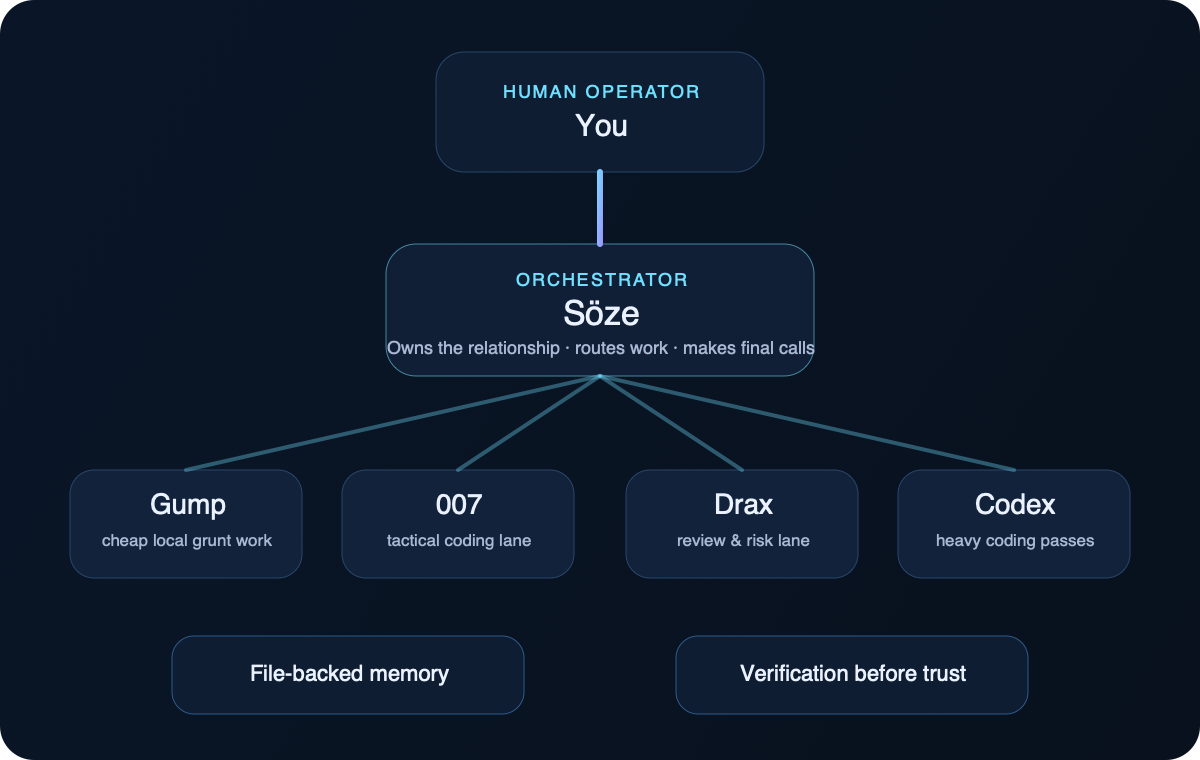
How the stack is shaped, what each lane owns, and where orchestration actually lives.
Which work goes to cheap local lanes, which goes to heavier coding agents, and when to stop pretending one size fits all.
File-backed continuity, daily notes, task state, and long-term memory without relying on vibes.
How to stop agents from narrating confidence and start demanding proofs, checks, and real stopping criteria.
Agent role templates, task packets, handoff shapes, verification checklists, and practical defaults you can copy.
A sane path to start lean, validate usefulness quickly, and avoid building an AI cathedral no one asked for.
A practical written walkthrough of the system: why it works, what each lane owns, and how to adopt it without turning your week into ceremony.
Agent role template, task packet template, verification checklist, and memory structure template you can adapt to your own stack.
Recommended rollout order, common traps, and where to keep things lean instead of building a cathedral for imaginary future-you.
Owns the relationship, frames the work, and makes the final call.
Handles transforms, extraction, and other cheap first-pass work.
Handles bounded implementation, debugging, and repo-local fixes.
Challenges risky work, spots gaps, and forces explicit go / no-go judgement.
Takes on larger autonomous coding passes with build / test verification.
Turns UI intent and route maps into buildable system shape.
Not really. It is for technical operators and builders who can tolerate configuring tools, files, and a bit of system plumbing.
You’ll receive the whole pack by email after purchase: guide PDF, Markdown source, starter templates, and the support docs that make it usable. Delivery is handled automatically, and if it does not land within a few hours you can reply to the receipt and we’ll sort it.
No. The value is in routing, memory, verification, boundaries, and handoffs. Swap in whatever models and harnesses fit your own stack.
Quite the opposite. The whole thesis is that most AI workflow content is too vague, too theatrical, or too detached from real operating discipline.
Checkout is handled on Stripe’s hosted payment page. RawClaw does not ask for card details directly on this site.
You can read the Privacy Policy, Terms, and Contact page directly on this domain.
You need a system where each lane has a job, context survives, and the work actually gets finished.